
The Mask Is Off

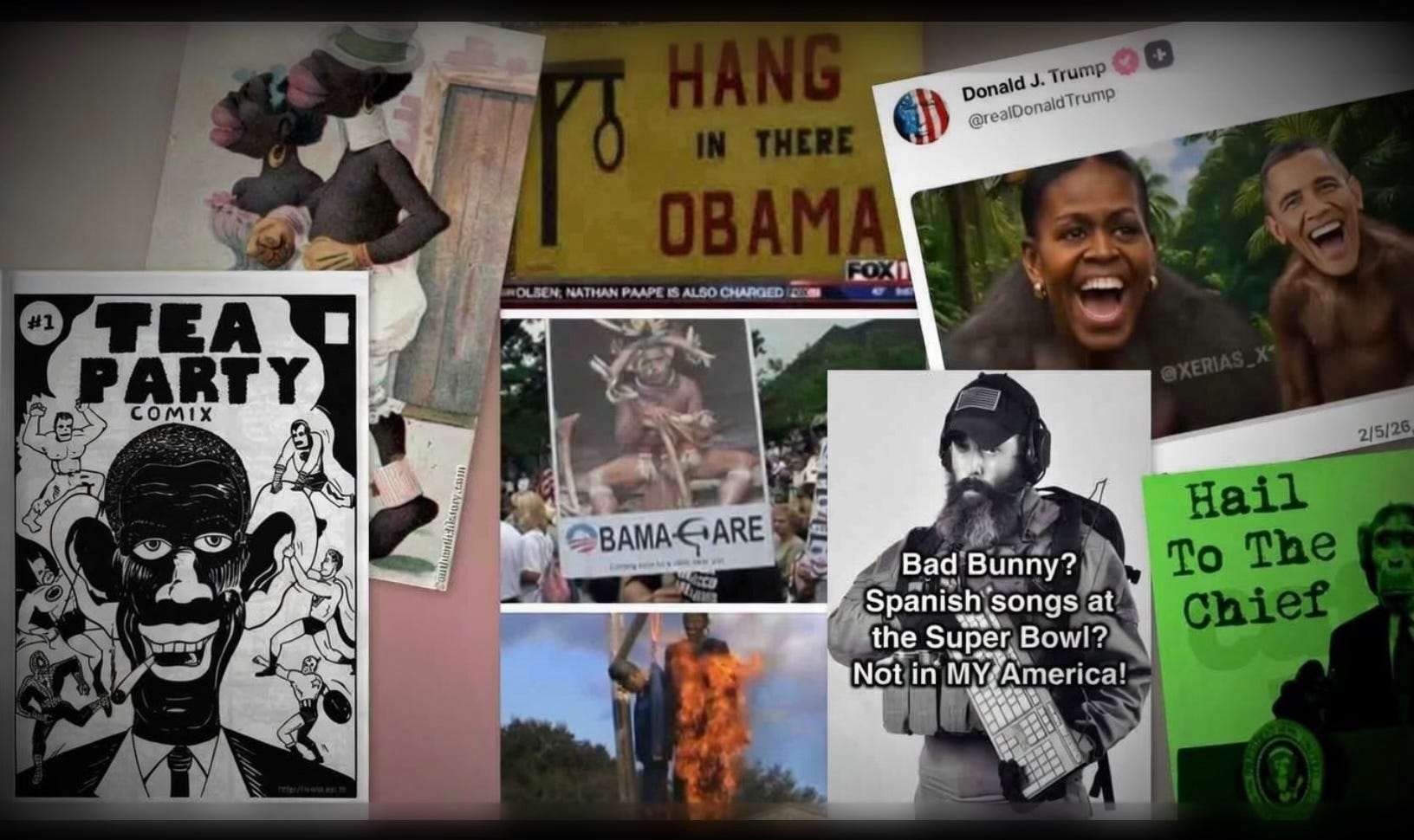
Every few years there is a cultural moment that forces a quiet but unavoidable choice. Not a partisan choice. Not a policy choice. A reality choice. Are we going to acknowledge what we are seeing, or are we going to keep pretending it is normal?
Trump posting a racist monkey video and refusing to apologize feels like one of those moments.
As a Black man, seeing that post felt like a gut punch. Not shocking. Not new. Still a gut punch. Because even when you expect it, even when you have watched the pattern for years, the moment still lands. And you know it will not be the last time. When Trump says “Make America Great Again,” we hear, “make America white again.”
The post itself was disturbing. The reaction afterward was revealing. Even after the backlash, even after people across the political spectrum said it crossed a line, the response was defiance. He said he did not make a mistake. There was no apology. No reflection. Just a slow deletion roughly a day later once the pressure became impossible to ignore.
A decent person confronted with racist imagery starts with “I’m sorry.” The refusal matters because it signals comfort. It signals intention. It signals he knows he has the support of his MAGA base. It signals the line has moved again.
For many Black Americans this moment didn’t feel shocking. It felt familiar. The only thing that feels new is how many people are finally unable to deny what they are seeing. And that’s a good thing.
For years, conversations about Trump’s racism have felt like two parallel realities. One group saw a pattern. Another group saw isolated incidents. But the pattern was visible long before politics entered the picture.
(Video I posted 2023)
In the 1970s, the federal government sued the Trump family real estate business for housing discrimination after evidence showed Black applicants were denied apartments. Former employees later described marking rental applications with a “C” to indicate Black renters. In 1989, Trump took out full-page newspaper ads calling for the death penalty after the Central Park Five case. The teenagers were later exonerated, yet he continued to defend his stance for years. In the 1990s, he told Congress some Native American casinos should be investigated because they did not “look like Indians.” In a 1991 book by a former casino executive, Trump was quoted saying he preferred Jewish accountants and did not want Black people handling his money.
None of these moments were hidden. They were public. They were reported. Many people simply chose not to see them as part of a larger story.
The imagery in the recent post matters because it carries centuries of history. For generations, racist propaganda compared Black people to apes to strip away humanity and justify discrimination and violence. These images appeared in newspapers, cartoons, and political campaigns. Americans saw echoes of this during the Obama presidency when protest signs repeatedly used monkey imagery. Many dismissed it at the time. Others recognized exactly what it was.
History gives context. Context gives meaning. Meaning makes the moment harder to dismiss.
What feels different now is the reaction. Some conservatives acknowledged the post crossed a line. That shift matters. It signals that the boundaries of what can be publicly defended may be changing, even within Trump’s own coalition.
And then, almost immediately, the cultural battle moved to a different stage.
When Bad Bunny was announced as the Super Bowl halftime performer, the backlash came fast and predictably. He was called un-American. His identity was framed as foreign. Yet Puerto Rico has been part of the United States since 1898. Puerto Ricans are American citizens. They’ve been Americans longer than several current states have even been states. Still, the reaction framed him as an outsider. As the “other”.
The debate was never really about music. It was about who gets to represent America.
The response went further. Turning Point USA created their version of an “All-American Halftime Show” featuring Kid Rock and other artists as counter-programming. The branding leaned heavily on patriotism and Christian identity. The contrast was striking. Kid Rock, whose public persona rarely aligns with traditional Christian values, was elevated as the symbol of “real America.”
But the actual halftime show centered themes conservatives often claim to defend. Family. Marriage. Community. Small business. Generational connection. Hard work. Love. The imagery included weddings, families, elders, young people, and neighborhood business owners. It celebrated the very values often invoked in political rhetoric.
And still, the backlash came.
Step back and the pattern becomes difficult to miss. Racist imagery gets defended. A Latino artist gets labeled un-American. An alternative show is created to reclaim “real America.” Christian branding becomes part of a cultural counterattack. And the values supposedly under threat were present the entire time.
The conflict was never truly about values. It was about identity. About belonging. About who gets to represent the country.
More people are starting to wake up to what has been in front of them all along. That gives me a glimmer of hope.
I remember back in 1983...Howard Cosell said..."That Little Monkey get's loose, doesn't he?...,about a Black Washington Redskins wide receiver, Alvin Garrett.
That was the last season Howard Cosell was on Monday Night Football.
🕊 This was an amazing read. Thank you. 🕊